
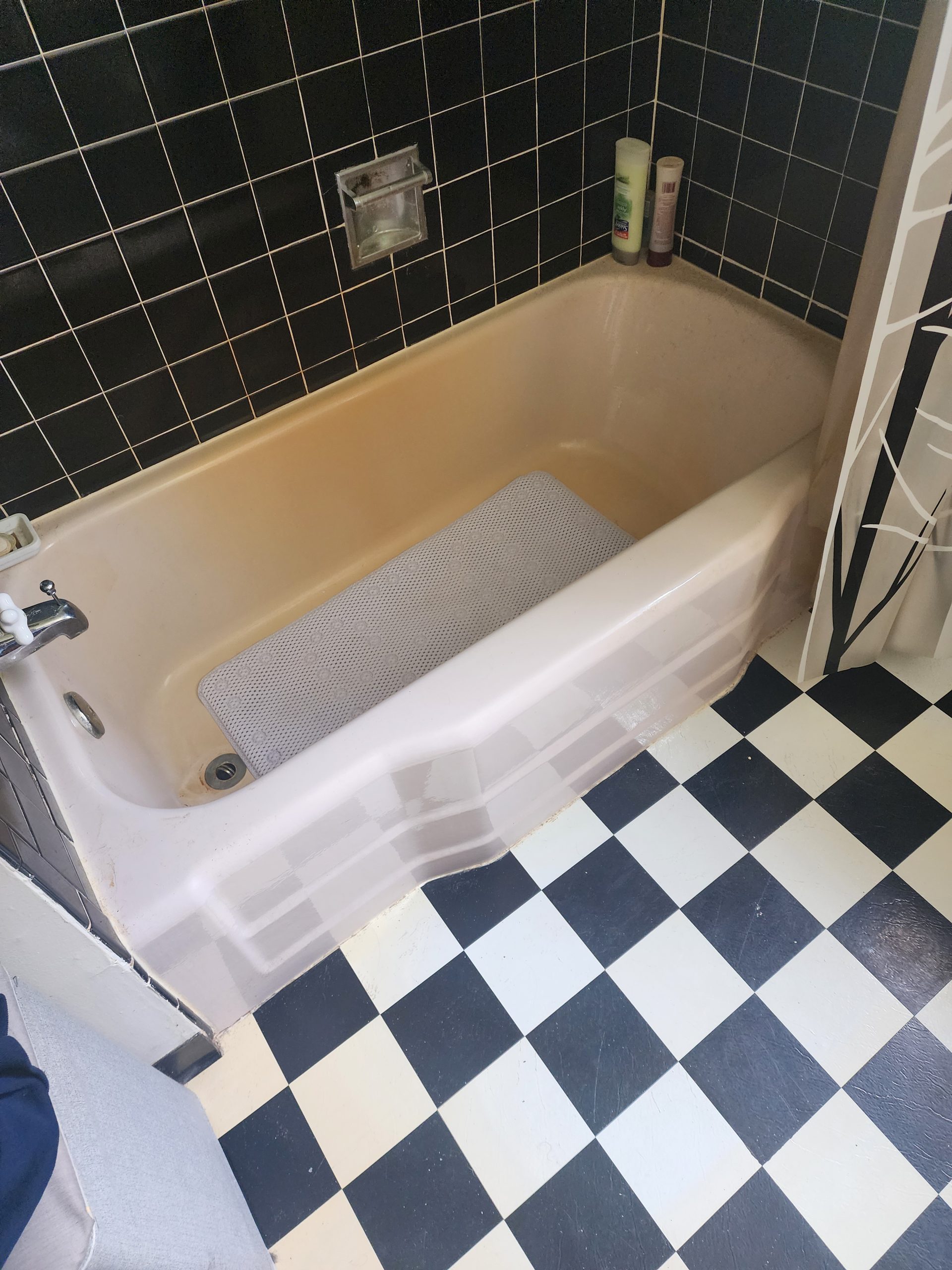
If your bathtub looks old, stained, scratched, or discolored, you may be considering refinishing instead of replacing it.
But does the material of the bathtub matter?
Absolutely.
Porcelain and fiberglass bathtubs have different characteristics, and the refinishing process needs to account for the condition and composition of the existing surface.
So which is better for bathtub refinishing: porcelain or fiberglass?
The answer depends less on which material is “better” and more on the condition of the specific bathtub.
Porcelain Bathtubs
Porcelain-enamel bathtubs have been popular for decades and are especially common in older homes.
They can provide a durable, classic appearance, but years of use can lead to:
- Chips
- Rust
- Stains
- Dullness
- Scratches
- Discoloration
An old porcelain tub may look beyond repair even when its underlying structure remains perfectly usable.
Professional refinishing can restore the surface without removing the bathtub.
Fiberglass Bathtubs
Fiberglass bathtubs are lightweight and common in modern bathrooms.
Over time, fiberglass can develop:
- Scratches
- Dull areas
- Discoloration
- Chips
- Surface wear
- Cracks
Fiberglass can also flex more than some heavier bathtub materials, making the condition of the underlying structure particularly important before refinishing.
Can Both Be Refinished?
In many cases, yes.
Both porcelain and fiberglass tubs can potentially be refinished when the underlying fixture is structurally sound.
However, the preparation process and repair requirements may differ.
The refinisher needs to evaluate the existing surface before selecting the appropriate preparation and coating system.
Porcelain vs. Fiberglass: Main Differences
| Feature | Porcelain | Fiberglass |
|---|---|---|
| Typical appearance | Traditional, hard, glossy | Smooth, lightweight |
| Common problems | Chips, rust, stains | Scratches, cracks, dullness |
| Refinishing possible | Yes, in many cases | Yes, in many cases |
| Weight | Heavier | Lightweight |
| Structural concerns | Corrosion/chipping | Flexing/cracking |
| Repair before refinishing | Often possible | Often possible |
| Best approach | Depends on condition | Depends on condition |
Which Material Is Easier to Refinish?
There is no universal answer.
The quality of the final result depends heavily on:
- Surface preparation
- Existing damage
- Previous coatings
- Material condition
- Appropriate bonding products
- Application technique
- Curing conditions
A badly damaged fiberglass tub may be more difficult to restore than a lightly worn porcelain tub.
Conversely, an old porcelain tub with extensive corrosion may require significant preparation before it can be refinished.
Refinishing a Porcelain Bathtub
A professional porcelain refinishing project generally begins with a thorough inspection and cleaning.
Chips, rust, or damaged areas may need to be repaired before the final coating is applied.
The goal is to create a clean, stable surface that can accept the refinishing system.
A professionally refinished porcelain bathtub can provide a dramatically improved appearance without the demolition associated with replacement.
Refinishing a Fiberglass Bathtub
Fiberglass requires careful handling during preparation.
Deep scratches, chips, or cracks may need to be repaired first.
The technician also needs to determine whether the bathtub is properly supported.
If the tub moves or flexes excessively, refinishing alone will not solve the underlying problem.
The structural condition should be addressed before applying the final finish.
Which One Lasts Longer After Refinishing?
The lifespan of a refinished bathtub depends on much more than the original material.
Important factors include:
- Preparation quality
- Coating quality
- Application technique
- Daily use
- Cleaning methods
- Bathroom conditions
- Maintenance
- Whether damage is repaired promptly
A professionally refinished and properly maintained bathtub can provide years of additional service.
Can You Change the Color?
Yes, professional refinishing can often be used to update the appearance of both porcelain and fiberglass tubs.
For example, an outdated almond-colored tub may be refinished in a modern white.
This can make a bathroom look substantially newer without replacing the fixture.
What About Cracks?
Cracks should always be evaluated before refinishing.
A small surface crack may be repairable.
A structural crack or crack associated with significant movement may require more extensive repair or replacement.
Refinishing should not be used to hide an unresolved structural problem.
What About Rust?
Rust is particularly common with older porcelain-enamel tubs when the underlying metal becomes exposed.
Small rusted areas may be repairable as part of the restoration process.
However, severe corrosion can indicate that the tub has deteriorated beyond a practical refinishing project.
A professional inspection can help determine the difference.
Which Is More Cost-Effective?
If the bathtub is structurally sound, refinishing can be a cost-effective alternative to replacement for both materials.
Replacement can involve:
- Demolition
- Tub removal
- Disposal
- Plumbing
- Installation
- Wall repairs
- Flooring repairs
- New trim and caulking
Refinishing typically involves much less disruption.
How Do You Choose the Right Option?
Instead of asking only:
“Is porcelain better than fiberglass?”
Ask:
“What condition is my bathtub in?”
A lightly worn fiberglass bathtub may be an excellent refinishing candidate.
An old porcelain tub with surface stains and chips may also be an excellent candidate.
The material is only one part of the decision.
Frequently Asked Questions
Is porcelain or fiberglass better for refinishing?
Both can often be refinished. The condition of the bathtub and the type of damage are more important than simply choosing one material over the other.
Can a fiberglass bathtub be reglazed?
Yes, fiberglass bathtubs can often be professionally refinished when they are structurally sound.
Can an old porcelain bathtub be refinished?
Yes. Refinishing is commonly used to restore older porcelain-enamel bathtubs.
Can cracked fiberglass be refinished?
The crack generally needs to be properly repaired before refinishing. Structural problems should not be covered with a new coating.
Which bathtub material is easier to maintain?
Both can be maintained successfully with appropriate non-abrasive cleaning and proper care.
There is no universal winner between porcelain and fiberglass.
Porcelain is an excellent refinishing candidate when the tub has cosmetic wear, chips, stains, or surface deterioration but remains structurally sound.
Fiberglass can also be an excellent candidate when scratches, discoloration, and surface wear are the primary problems.
The most important factor is the condition of the bathtub—not simply the material.
If you are unsure whether your porcelain or fiberglass bathtub can be refinished, Perfect Bathtub Reglazing can inspect the surface and recommend the most appropriate solution.