
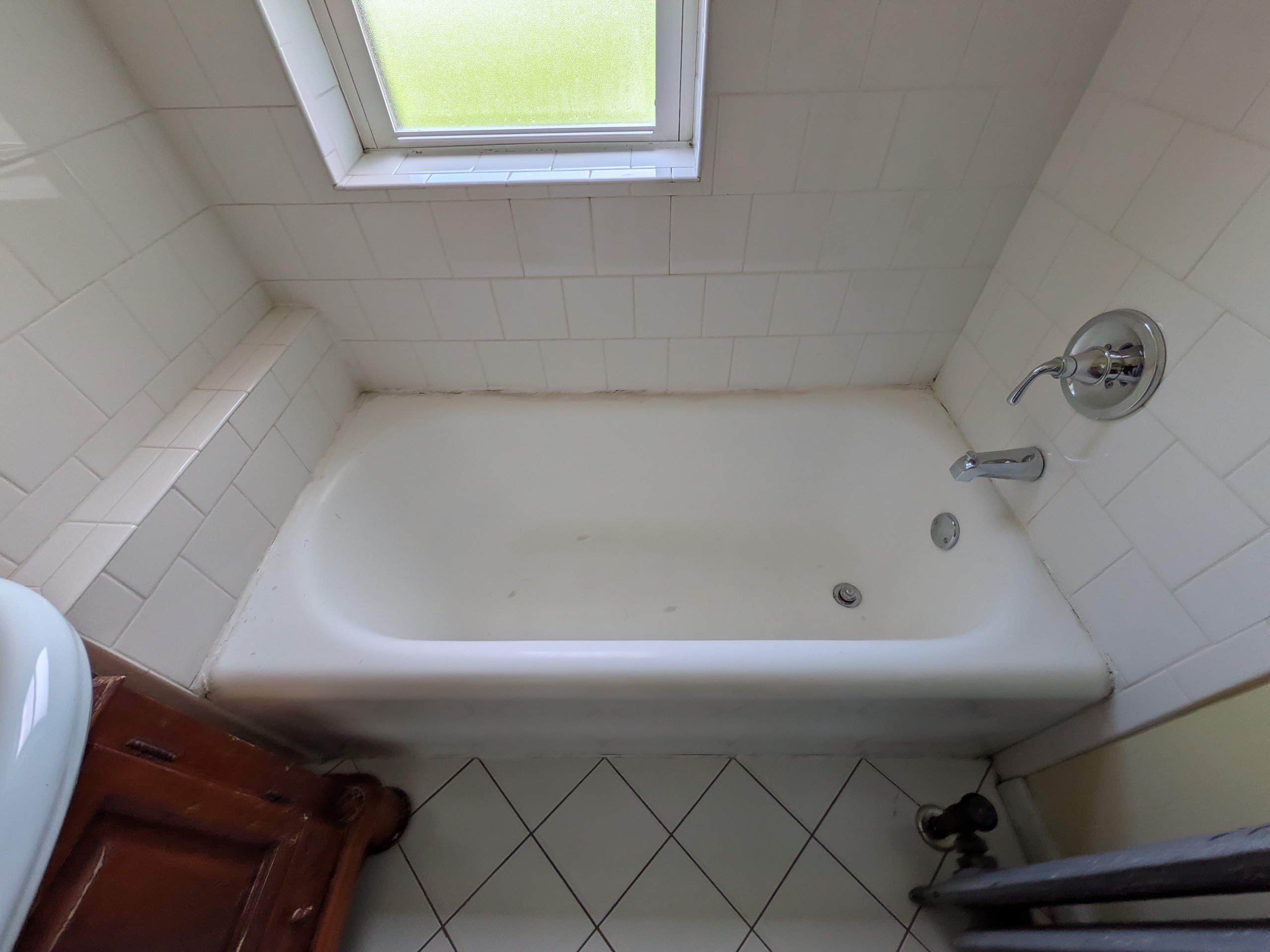
A crack in a bathtub can be alarming.
Many homeowners see a crack and immediately assume the bathtub needs to be replaced. But not every bathtub crack means the same thing.
A small surface crack, a chip in the finish, a crack in acrylic, and a structural crack in the tub are very different problems.
In some situations, the damage can be repaired and the bathtub refinished. In others, replacement is the safer and more practical option.
So, can you refinish a cracked bathtub?
The answer is: sometimes—but the crack needs to be evaluated before refinishing begins.
First: What Type of Crack Does Your Bathtub Have?
The most important question is whether the damage affects only the surface or the actual structure of the bathtub.
Surface-Level Cracks
Small cracks limited to the finish may be repairable.
They can occur because of:
- Age
- Impact
- Normal wear
- Previous refinishing failure
- Temperature changes
- Improper cleaning
If the bathtub underneath is structurally sound, the damaged area can potentially be repaired and the surface refinished.
Acrylic or Fiberglass Cracks
Acrylic and fiberglass bathtubs require additional attention.
These materials can develop cracks from impact, movement, improper installation, or repeated stress.
A technician needs to determine whether the crack is superficial or extends through the material.
Structural Cracks
A structural crack is much more serious.
If the bathtub flexes excessively, leaks, or cannot reliably hold water, refinishing alone is not an appropriate solution.
The underlying structural problem must be addressed first.
Signs That a Cracked Bathtub May Be Repairable
A professional may be able to repair and refinish the bathtub when:
- The crack is relatively small
- The surrounding material is stable
- The tub does not leak
- There is no significant movement
- The damage is primarily cosmetic
- The bathtub remains structurally sound
The repair process depends heavily on the material and location of the damage.
Signs That Bathtub Replacement May Be Necessary
Replacement may be recommended when there is:
- A large structural crack
- Persistent leaking
- Severe deformation
- Major movement or flexing
- Extensive corrosion
- Serious damage around the drain
- Structural deterioration underneath the surface
The goal is not simply to make the bathtub look new.
The tub also needs to remain safe and watertight.
Can You Refinish a Cracked Fiberglass Tub?
Potentially, yes.
Fiberglass tubs can sometimes be repaired before refinishing.
The damaged area may need to be stabilized and repaired before the refinishing process begins.
A refinishing coating should not be used as a substitute for structural repair.
If a fiberglass tub is still moving or flexing significantly, simply applying a new surface coating will not solve the underlying problem.
Can You Refinish a Cracked Acrylic Tub?
Acrylic tubs can also sometimes be repaired and refinished.
However, acrylic requires careful evaluation because a crack can extend deeper into the material than what is visible on the surface.
The technician needs to determine:
- How deep the crack is
- Whether the surrounding acrylic is stable
- Whether the tub flexes
- Whether water is entering the damaged area
- Whether the crack is growing
Specialized repair systems are available for certain damaged acrylic and fiberglass tubs.
What Happens During a Professional Crack Repair?
The exact procedure depends on the bathtub material and damage.
A typical restoration may involve:
1. Inspecting the Damage
The technician examines the crack and surrounding surface.
The area may also be checked for movement, moisture, or additional hidden damage.
2. Preparing the Damaged Area
The damaged area must be cleaned and prepared so that the repair material can properly bond.
3. Stabilizing the Crack
Where appropriate, the damaged section is repaired using a material and technique compatible with the bathtub.
4. Smoothing the Repair
Once the repair has cured, the surface is carefully leveled and blended with the surrounding area.
5. Preparing the Entire Bathtub
If the bathtub is being completely refinished, the remaining surface is cleaned and prepared for the new finish.
6. Applying the New Coating
A professional refinishing system is applied to restore the appearance and create a consistent finish.
7. Allowing the Surface to Cure
The bathtub remains unused for the recommended curing period.
Crack Repair vs. Bathtub Replacement
Here is a simple comparison.
| Factor | Repair + Refinishing | Replacement |
|---|---|---|
| Demolition | Usually minimal | Usually required |
| Plumbing work | Often minimal | May be required |
| Disposal | No full tub disposal | Old tub must be removed |
| Bathroom disruption | Lower | Higher |
| Cosmetic restoration | Excellent | New fixture |
| Structural damage | Depends on severity | Complete replacement |
| Best for | Sound tubs with repairable damage | Severely damaged tubs |
Replacing a bathtub can involve removal, disposal, plumbing modifications, installation, and repairs to surrounding walls or flooring. This is why replacement is often a substantially larger project than refinishing.
What If the Crack Is Near the Drain?
Cracks near the drain deserve special attention.
The drain area experiences repeated water exposure and mechanical stress.
If there is a crack around the drain, do not assume that refinishing alone will solve the problem.
The area should be inspected to determine whether the damage is limited to the surface or affects the underlying tub.
What If Water Is Leaking Through the Crack?
If water is escaping through the bathtub, the situation is more serious.
A cosmetic refinishing coating should never be used as a substitute for fixing a leak.
The source of the leak needs to be identified and repaired before the final surface restoration.
What If the Crack Keeps Coming Back?
Recurring cracks are a warning sign.
If a crack has already been repaired and returns, there may be an underlying issue such as:
- Tub movement
- Poor support
- Excessive flexing
- Structural damage
- Improper previous repair
In this situation, applying another surface coating may only hide the problem temporarily.
A professional assessment is the better starting point.
Is Bathtub Refinishing Worth It After a Crack Repair?
If the bathtub is structurally sound, absolutely.
After a damaged area has been properly repaired, refinishing can restore the appearance of the entire surface.
This can be particularly useful when the bathtub also has:
- Scratches
- Stains
- Discoloration
- Dullness
- Multiple chips
- An outdated color
Instead of replacing the entire bathtub, the existing fixture can potentially be restored.
How to Prevent Cracks From Getting Worse
If you notice a crack, avoid putting additional stress on the damaged area.
Do not:
- Scrub aggressively
- Drill into the crack
- Apply random adhesives
- Use harsh chemicals
- Ignore water leakage
- Continue using a severely damaged tub without inspection
A small crack may be easier to address before it expands.
Frequently Asked Questions
Can a cracked bathtub be refinished?
Yes, if the bathtub is structurally sound and the crack can be properly repaired before refinishing.
Can refinishing fix a bathtub crack?
Refinishing alone does not repair structural damage. The crack needs to be properly repaired first.
Should I replace a bathtub with a small crack?
Not necessarily. A small, repairable crack in an otherwise sound bathtub may be restored without replacement.
Can an acrylic bathtub with a crack be repaired?
Some acrylic cracks can be professionally repaired. The correct approach depends on the depth, location, and severity of the damage.
Is a leaking bathtub repairable?
It depends on the source and severity of the leak. A leaking tub should be professionally evaluated before any refinishing work.
What is cheaper: bathtub repair or replacement?
When the bathtub is structurally sound, repairing and refinishing can often avoid the demolition, disposal, plumbing, and installation associated with replacement.
A cracked bathtub does not automatically mean you need to buy a new tub.
The key is determining whether the crack is cosmetic, repairable, or structural.
A professional inspection can help determine whether the best solution is:
Repair → Refinish → Continue using the existing bathtub
or:
Replace → Install a new bathtub
If your bathtub has a crack, chip, leak, or other damage, Perfect Bathtub Reglazing can evaluate the condition of the surface and help you determine the most practical restoration option.
Contact Perfect Bathtub Reglazing today for a professional assessment.