
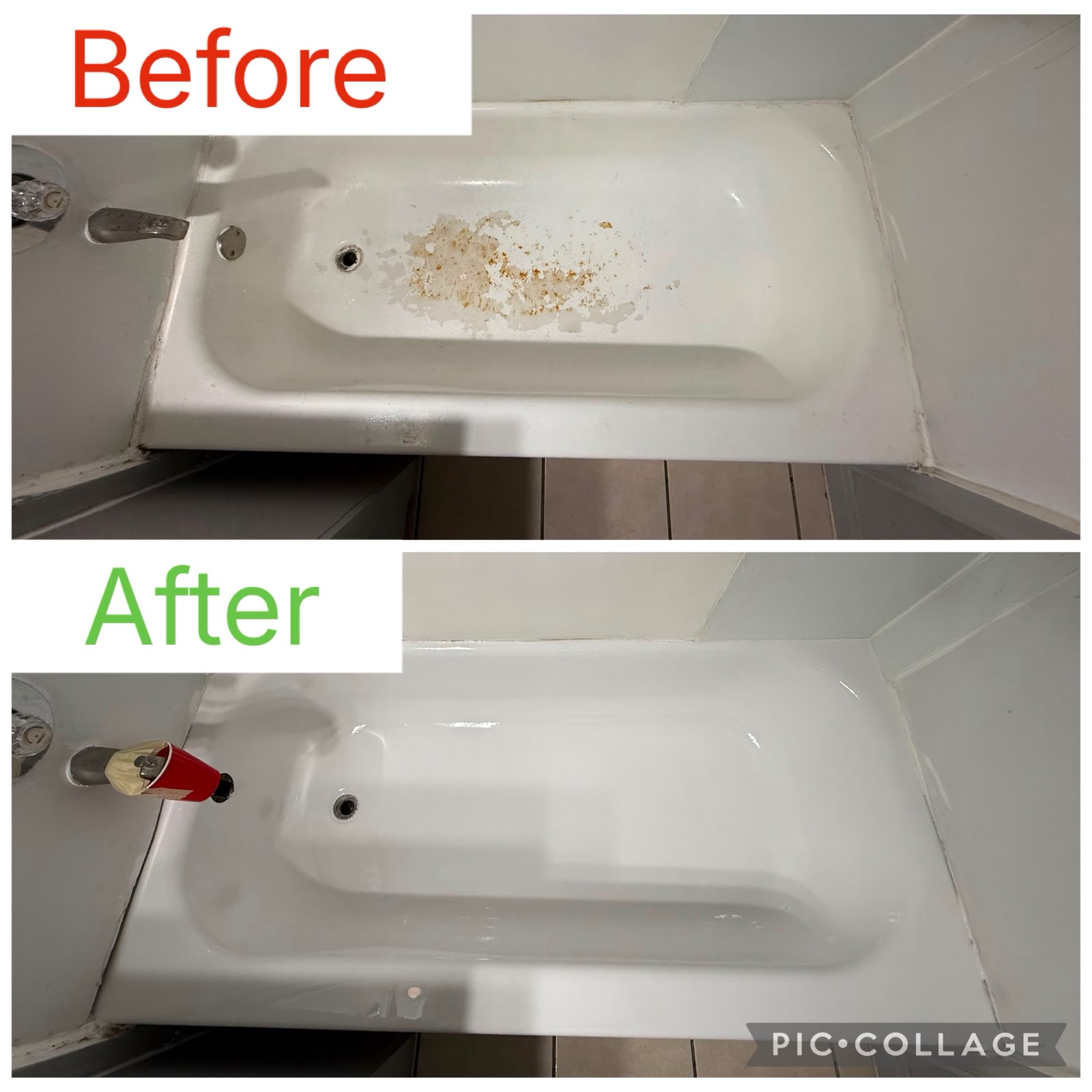
Acrylic bathtubs are popular because they are lightweight, attractive, comfortable, and available in many shapes and designs. But even a good acrylic bathtub can eventually become scratched, dull, stained, discolored, or worn.
When that happens, many homeowners ask the same question:
Can you refinish an acrylic bathtub?
In many cases, the answer is yes.
Professional acrylic bathtub refinishing can restore the appearance of a worn surface without removing the existing bathtub. However, acrylic requires careful preparation and the correct refinishing approach.
This guide explains when acrylic refinishing makes sense, how the process works, what problems can be repaired, and when replacement may be a better option.
What Is an Acrylic Bathtub?
Acrylic bathtubs are manufactured from acrylic sheets or molded acrylic materials. They are commonly reinforced underneath to provide additional strength and rigidity.
Acrylic is naturally smooth and glossy when new, but years of use can cause:
- Scratches
- Dullness
- Discoloration
- Surface stains
- Minor chips
- Fine crazing
- Loss of gloss
- Cosmetic wear
These problems do not necessarily mean the bathtub has reached the end of its useful life.
If the underlying structure remains sound, restoring the surface may be possible.
Can Acrylic Bathtubs Be Refinished?
Yes, many acrylic bathtubs can be professionally refinished.
However, acrylic is different from porcelain, cast iron, or enameled steel. The surface is more sensitive to aggressive preparation methods and excessive heat or chemical exposure.
The refinisher needs to determine:
- The condition of the acrylic
- Whether the surface has been refinished before
- Whether there are cracks or structural defects
- How deep the scratches are
- Whether the acrylic is still structurally sound
- Which coating system is appropriate
A professional assessment is particularly important if the acrylic surface has deep damage.
What Problems Can Acrylic Refinishing Fix?
Refinishing is primarily a surface-restoration process.
It can often improve problems such as:
Surface Scratches
Light and moderate surface scratches may be repaired as part of the preparation and refinishing process.
Dull Appearance
Older acrylic can lose its original shine. Refinishing can restore a smooth, fresh appearance.
Staining
Permanent discoloration that cannot be removed through normal cleaning may be addressed during the restoration process.
Minor Chips
Small chips can often be repaired and blended before the final coating is applied.
Color Changes
If the existing acrylic color looks dated or no longer matches the bathroom, refinishing can provide an opportunity to change the appearance.
What About Cracks in an Acrylic Bathtub?
This is where professional evaluation becomes especially important.
A small surface crack may be repairable before refinishing.
However, a major structural crack, a crack that continues to spread, or damage that causes the bathtub to flex excessively may require a different repair strategy.
Refinishing does not magically restore structural strength to damaged acrylic.
The crack needs to be repaired first, and the underlying structure must be evaluated.
Some professional refinishing companies use specialized repair systems for damaged acrylic and fiberglass tubs.
How Does Acrylic Bathtub Refinishing Work?
While exact procedures vary between companies, a professional restoration generally involves several stages.
Step 1: Inspection
The bathtub is examined to determine the condition of the acrylic.
The technician looks for:
- Cracks
- Chips
- Deep scratches
- Previous coatings
- Areas of flexing
- Water damage
- Failed caulking
- Structural problems
Step 2: Cleaning and Preparation
The entire surface needs to be thoroughly cleaned and prepared.
Any soap residue, oils, silicone, mineral deposits, or contaminants can interfere with adhesion.
Preparation is one of the most important parts of the refinishing process.
Step 3: Repairing Damage
Minor chips, scratches, cracks, or other imperfections may be repaired before the new coating is applied.
The objective is to create a stable and properly prepared surface.
Step 4: Surface Conditioning
Acrylic cannot simply be treated like a porcelain bathtub.
The surface must be prepared using methods appropriate for acrylic and for the specific coating system.
Step 5: Primer or Bonding System
Depending on the refinishing system, a compatible bonding or primer layer may be applied.
The purpose is to establish reliable adhesion between the existing surface and the new finish.
Step 6: Application of the New Finish
The refinishing material is professionally applied to create an even, consistent surface.
Proper application helps prevent problems such as:
- Runs
- Uneven texture
- Orange peel
- Thin spots
- Premature peeling
Step 7: Curing
The new finish needs time to cure before normal bathtub use.
The exact waiting period depends on the products and application system.
Can You Change the Color of an Acrylic Bathtub?
In many situations, yes.
One of the benefits of professional refinishing is the ability to update an outdated color without purchasing a completely new bathtub.
For example, an older beige, almond, or yellowed tub can potentially be refinished in a clean modern white.
Color selection should be discussed with the refinishing company before the work begins.
Acrylic Refinishing vs. Acrylic Bathtub Replacement
Replacement may seem like the obvious solution when an acrylic tub looks old.
But replacement involves much more than purchasing another bathtub.
It may require:
- Removing the existing tub
- Demolition
- Disconnecting plumbing
- Removing surrounding materials
- Disposal
- Installing the new tub
- Reconnecting plumbing
- Repairing walls or flooring
- Reinstalling trim and caulking
Refinishing can avoid much of this disruption when the existing tub is structurally sound.
When Should You Replace an Acrylic Bathtub?
Refinishing is not the right solution for every bathtub.
Replacement may be more appropriate if the acrylic tub has:
- Severe structural cracking
- Major deformation
- Significant water damage
- Extensive deterioration
- Serious movement or flexing
- Damage that compromises the tub’s ability to hold water
A professional inspection can help determine which option makes sense.
How to Maintain a Refinished Acrylic Bathtub
Once the bathtub has been refinished, maintenance becomes important.
Use mild cleaners
Avoid abrasive powders and aggressive scrubbing.
Use a soft sponge
A soft non-abrasive sponge is generally preferable to rough scouring pads.
Avoid suction-cup mats
Ask your refinisher whether your particular finish can safely accommodate a bath mat.
Do not drop heavy objects
Impact can chip a refinished surface.
Repair damage promptly
A small chip or crack should not be ignored.
How Long Does Acrylic Refinishing Last?
There is no single lifespan that applies to every refinished acrylic bathtub.
Longevity depends on:
- Quality of preparation
- Coating system
- Application technique
- Bathroom conditions
- Frequency of use
- Cleaning products
- Maintenance
- Previous refinishing work
A properly maintained professional refinishing job can significantly extend the useful life of a bathtub.
Frequently Asked Questions
Can an acrylic bathtub be reglazed?
Yes. Acrylic bathtubs can often be professionally refinished or reglazed when the underlying material is structurally sound.
Can you refinish a scratched acrylic bathtub?
Yes, many surface scratches can be addressed during professional preparation and refinishing. Deep structural damage requires additional evaluation.
Can you refinish an acrylic tub more than once?
It depends on the condition of the existing coating and the bathtub itself. A professional should inspect previous layers before recommending another refinishing job.
Can you refinish a cracked acrylic bathtub?
A surface-level crack may be repairable before refinishing. Major structural cracks require a more extensive repair or potentially replacement.
Is acrylic bathtub refinishing cheaper than replacement?
It is often less disruptive and can be less expensive than replacing an otherwise functional bathtub because demolition, disposal, plumbing, and installation may be avoided.
An old acrylic bathtub does not necessarily need to be replaced.
If the tub is structurally sound but has become scratched, dull, stained, or outdated, professional refinishing can provide a practical way to restore its appearance.
The most important step is determining whether the problem is cosmetic or structural.
If you are considering acrylic bathtub refinishing, Perfect Bathtub Reglazing can evaluate the condition of your tub and recommend the appropriate restoration approach.
Contact us today to find out whether your acrylic bathtub can be professionally refinished.